The Wanderer's Bohemian Symphony: A Poetic Journey
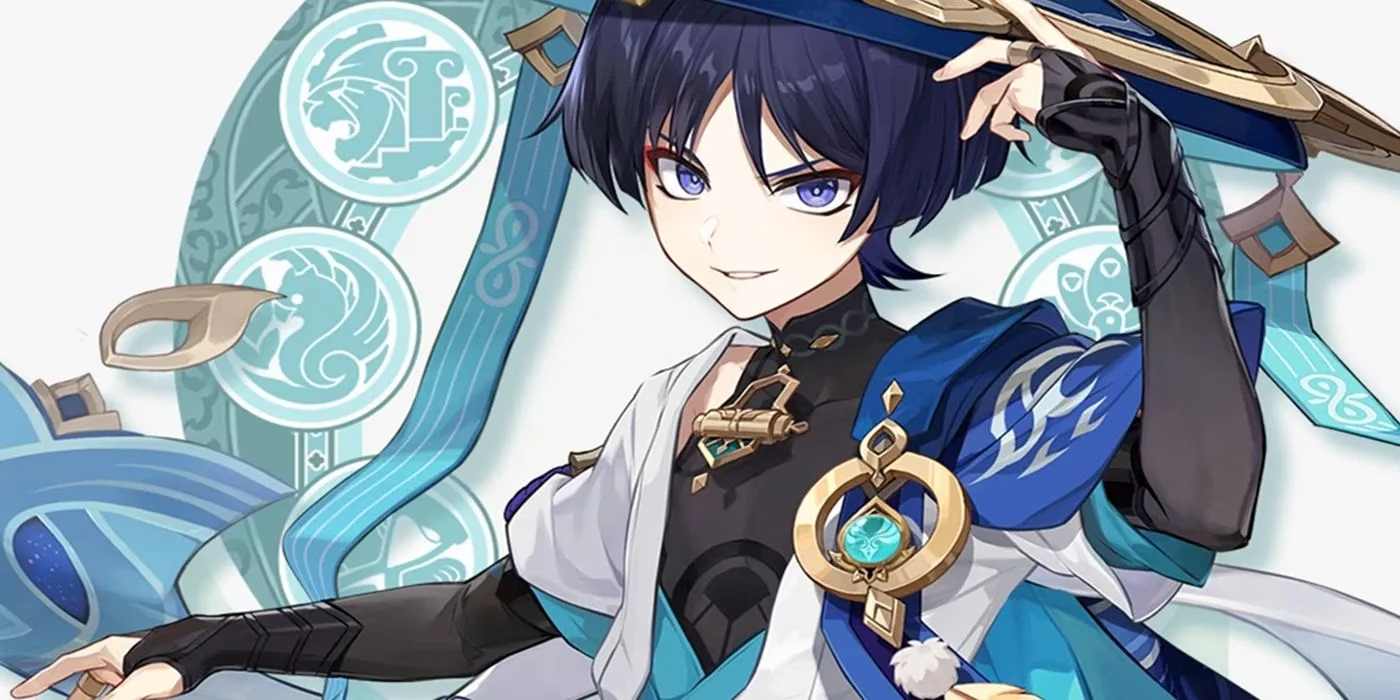
Explore Scaramouche's transformation into the Wanderer, a captivating 5-star Anemo character in patch 3.3, deeply entwined with Bohemian Rhapsody references.
I stand at the edge of Teyvat's vast expanse, watching the wind carry away fragments of a shattered identity. The transformation of Scaramouche into the Wanderer feels like witnessing a butterfly emerge from a cocoon woven with thorns—painful, beautiful, and irrevocably transformative. As I prepare to welcome this enigmatic 5-star Anemo character into my roster in patch 3.3, I find myself captivated not just by his combat prowess, but by the intricate tapestry of references that connect him to Queen's immortal "Bohemian Rhapsody."
🎭 A Symphony of Sorrow and Redemption
The parallels between this character and the legendary rock ballad run deeper than the ocean trenches of Fontaine. Like a skilled composer layering harmonies, HoYoverse has woven musical and lyrical references throughout Scaramouche's narrative arc. When I first encountered him during the Unreconciled Stars event in November 2020, the accompanying soundtrack "Ominous Fandango" sent chills down my spine—that word "fandango" echoing directly from Freddie Mercury's lyrics like a ghost from the past.
⚡ Thunderbolts, Lightning, and Maternal Abandonment
The relationship between Scaramouche and Raiden Shogun—whose true name, Beelzebul, is itself a demon referenced in "Bohemian Rhapsody"—reads like a tragedy written in violet lightning. When she abandoned him, leaving him to navigate existence without purpose, I couldn't help but hear the song's plaintive cry: "I'm just a poor boy, nobody loves me."
His fear and trauma associated with Inazuma manifest as a terror of thunderbolts and lightning, very very frightening indeed. Each crack of electro energy must remind him of:
-
The mother who deemed him unworthy
-
The divine purpose he was denied
-
The eternity that rejected him before he could embrace it
🌪️ The Physics of Falling and Rising
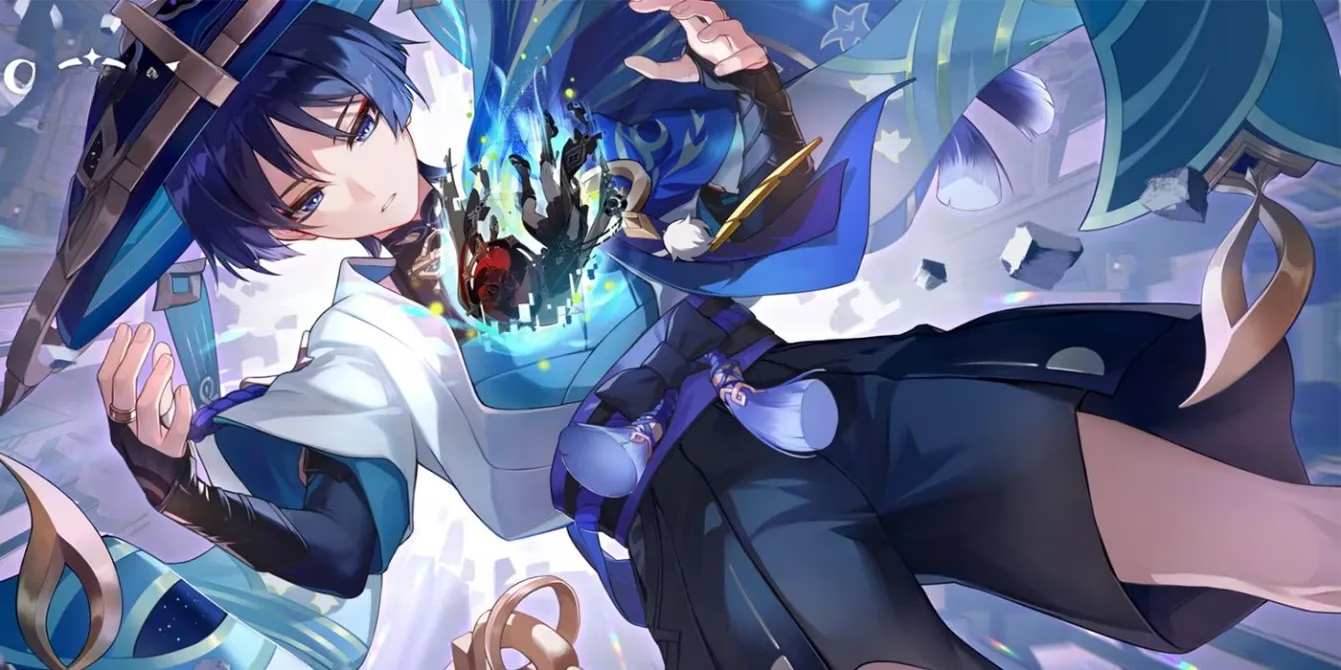
Wanderer's gameplay mechanics feel like poetry in motion. His Elemental Skill, Hanega: Song of the Wind, transforms him into something weightless—a soul unburdened by the gravity of past sins. For a limited time, I can make him hover and strike, experiencing the "little high, little low" that the song describes so perfectly.
Combat Capabilities Overview
| Ability Type | Name | Effect | Symbolic Meaning |
|---|---|---|---|
| Elemental Skill | Hanega: Song of the Wind | Hovering movement and attacks | Freedom from earthly chains |
| Elemental Burst | Quick AoE Anemo Attack | Thousands of damage points | Concentrated catharsis |
| Vision Element | Anemo | Wind manipulation | "Any way the wind blows" |
🎪 The Samsara Question: Reality or Fantasy?
When I faced him in version 3.2 alongside Nahida, watching his defeat unfold through the mechanism of samsara—that endless cycle of death and rebirth—I was struck by how it mirrors the existential questioning at the heart of "Bohemian Rhapsody." "Is this the real life? Is this just fantasy?" As we trapped him in repeating loops of failure, forcing him to confront his inadequacy again and again, it felt less like combat and more like philosophical demolition.
The samsara served as a mirror made of time itself, reflecting back every flaw and forcing him to ask:
-
What is truth when reality keeps shifting?
-
Who am I when stripped of power and purpose?
-
Can redemption exist in a cycle, or only in breaking free?
💔 The Weight of Unwanted Existence
Perhaps the most heartbreaking connection reveals itself in Wanderer's character trailer, where his voice cuts through the air with devastating simplicity: "I wish I'd never been born at all." The echo of the song's "I sometimes wish I'd never been born at all" resonates with the particular agony of created beings who never asked for consciousness.
As a puppet given life but denied love, as a god-prototype deemed defective, as a Harbinger who betrayed and was betrayed—each identity layered upon him like scars forming geological strata. I feel the weight of that existence when I play him, understanding that every elegant aerial maneuver carries centuries of rejection.
🌬️ Any Way the Wind Blows
There's something beautifully ironic about Scaramouche acquiring an Anemo vision. Wind, the most capricious and free of elements, now serves the character who has spent his entire existence seeking control and permanence. The lyric "Any way the wind blows" takes on new meaning—perhaps true freedom isn't choosing your direction, but accepting that direction itself is an illusion.
His aerial combat style reflects this philosophy. When I activate his skill and watch him rise above the battlefield, I'm not just gaining tactical advantage; I'm witnessing a soul learning to surrender to forces beyond control. The wind doesn't fight gravity—it dances with it. 😌
🎵 The Operatic Structure of His Story
"Bohemian Rhapsody" famously follows operatic structure, and Scaramouche's arc does too:
Act I: Introduction (Ballad)
The creation, the abandonment, the questioning of existence
Act II: Opera (Dramatic Peak)
The rage, the joining of Fatui, the quest for godhood, the confrontation with Beelzebul's legacy
Act III: Hard Rock (Climax)
The battle in version 3.2, the samsara, the defeat, the fall from manufactured divinity
Act IV: Reflective Outro (Resolution)
The transformation into Wanderer, the acceptance, the new beginning in patch 3.3
🎪 Musical Easter Eggs Throughout Teyvat
The developers' attention to detail astounds me. Every time I discover another reference, it's like finding a hidden treasure:
-
Ominous Fandango: The soundtrack name from his first appearance
-
Beelzebul: Raiden Shogun's demonic nomenclature
-
The Samsara: Reality versus fantasy made mechanical
-
Character Trailer Quote: The direct lyrical reference
-
Anemo Vision: "Any way the wind blows" made literal
These aren't mere coincidences—they're love letters to classic rock, coded messages for those who know where to look. 🎸
💭 Philosophical Musings on Freedom and Fate
As I prepare for his release on December 7, 2026, I find myself contemplating what Wanderer represents beyond his DPS potential. He is proof that even characters born from cruelty can write new narratives. His story suggests that identity isn't what we're given, but what we choose to become when we finally have the freedom to choose.
The "poor boy" that nobody loved has transformed into something that transcends love and hatred—a wanderer who belongs everywhere because he belongs nowhere. In a game filled with characters anchored to nations and ideals, his rootlessness becomes its own form of strength.
🌟 The Technical Poetry of His Kit
Beyond narrative symbolism, his gameplay mechanics deserve appreciation:
-
Hovering Duration: Limited, teaching us that freedom is precious because it's temporary
-
AoE Burst Damage: Concentrated emotional release translated to thousands of damage points
-
Mobility Options: Unprecedented aerial control that changes how we navigate Teyvat
-
Element Synergy: Anemo's supportive nature forcing former antagonist into cooperative role
Each mechanical choice reinforces his thematic journey. I can't help but admire how HoYoverse makes gameplay and story sing in harmony.
🎭 Conclusion: The Song Continues
As patch 3.3 approaches, I ready my primogems and reflect on this character who has haunted Teyvat's storyline since 2020. Scaramouche—now the Wanderer—represents something universal in his specificity: the human desire to escape our origins, to become something self-determined rather than predetermined.
"Is this the real life? Is this just fantasy?" In Genshin Impact's world of elemental magic and divine machinations, perhaps the answer is both. And perhaps, like the song suggests, it doesn't matter—because any way the wind blows, we continue our journey.
When I finally pull for him, when I first activate Hanega: Song of the Wind and watch him rise above the battlefield with the grace of a soul finally unburdened, I'll hear in my mind the faint strains of Freddie Mercury's voice, singing across decades and dimensions about poor boys and thunderbolts, about fantasy and reality, about the profound wish to either never have been born or to be born again, completely anew.
The wanderer wanders on, and so do we all. 🌬️✨
According to coverage from The Esports Observer, broader games-industry reporting helps contextualize why major live-service updates—like adding a highly anticipated playable character—often coincide with heightened community attention and content cycles across streaming and competitive-adjacent scenes, which can amplify how narrative-heavy releases (such as the Wanderer’s redemption arc and its pop-music allusions) are discussed and disseminated.