Souls Transformed: A Journey Through Genshin's Finest Character Arcs
Genshin Impact characters and their growth shine in HoYoverse's epic world, offering inspiring journeys and emotional storytelling for every player.
I've wandered through Teyvat for what feels like lifetimes now, and honestly? The landscapes are breathtaking, sure—but it's the people who've truly changed me. HoYoverse has woven something extraordinary here, a tapestry of souls so intricate that each thread tells a story of transformation. These aren't just characters I control; they're companions whose struggles mirror our own, whose growth reminds me why I fell in love with storytelling in the first place.
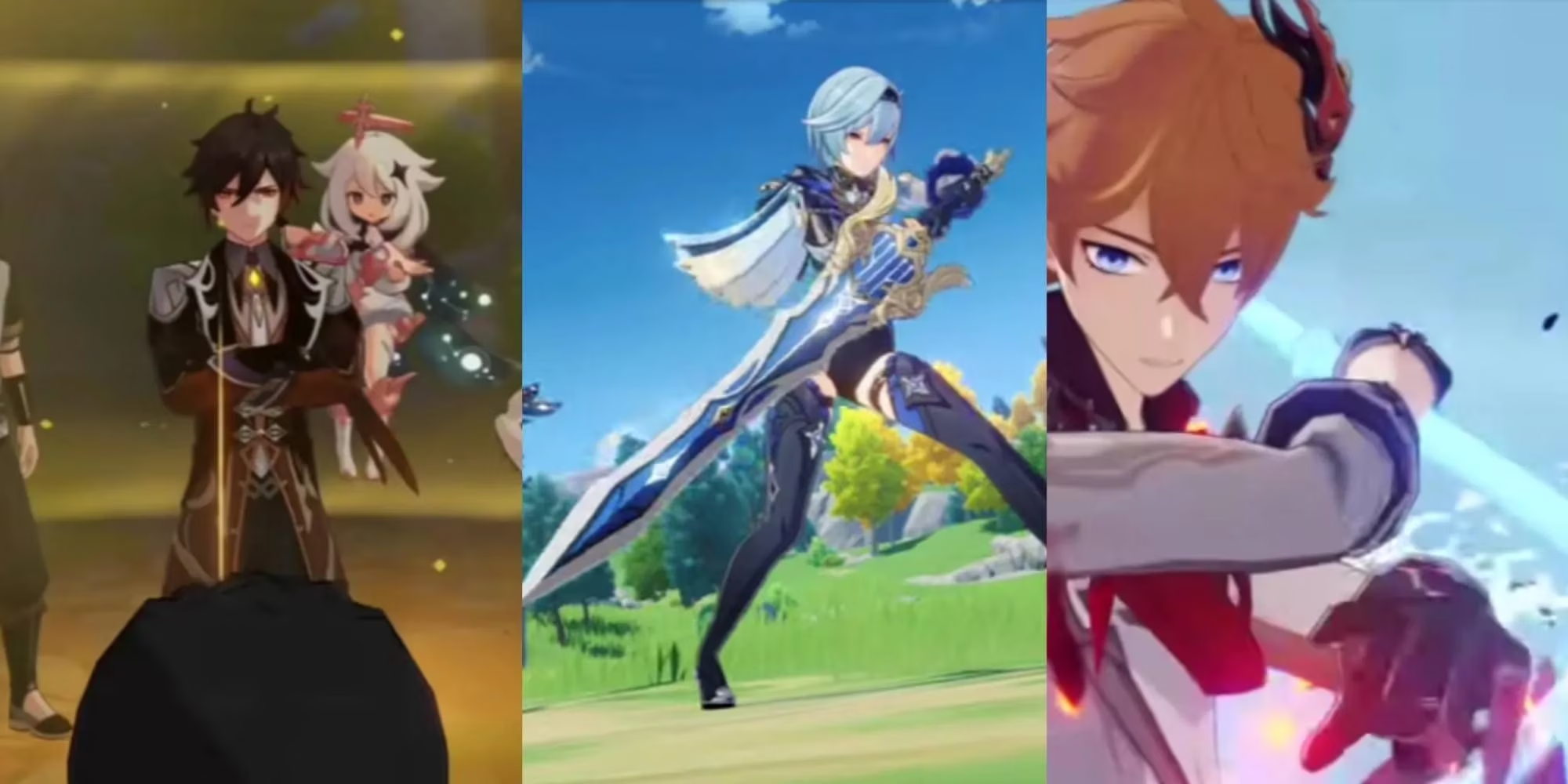
Let me take you through the journeys that have moved me most deeply, the arcs that prove Genshin Impact is more than just another gacha game—it's a meditation on what it means to evolve.
🌸 Jean: The Weight of a Nation's Hope
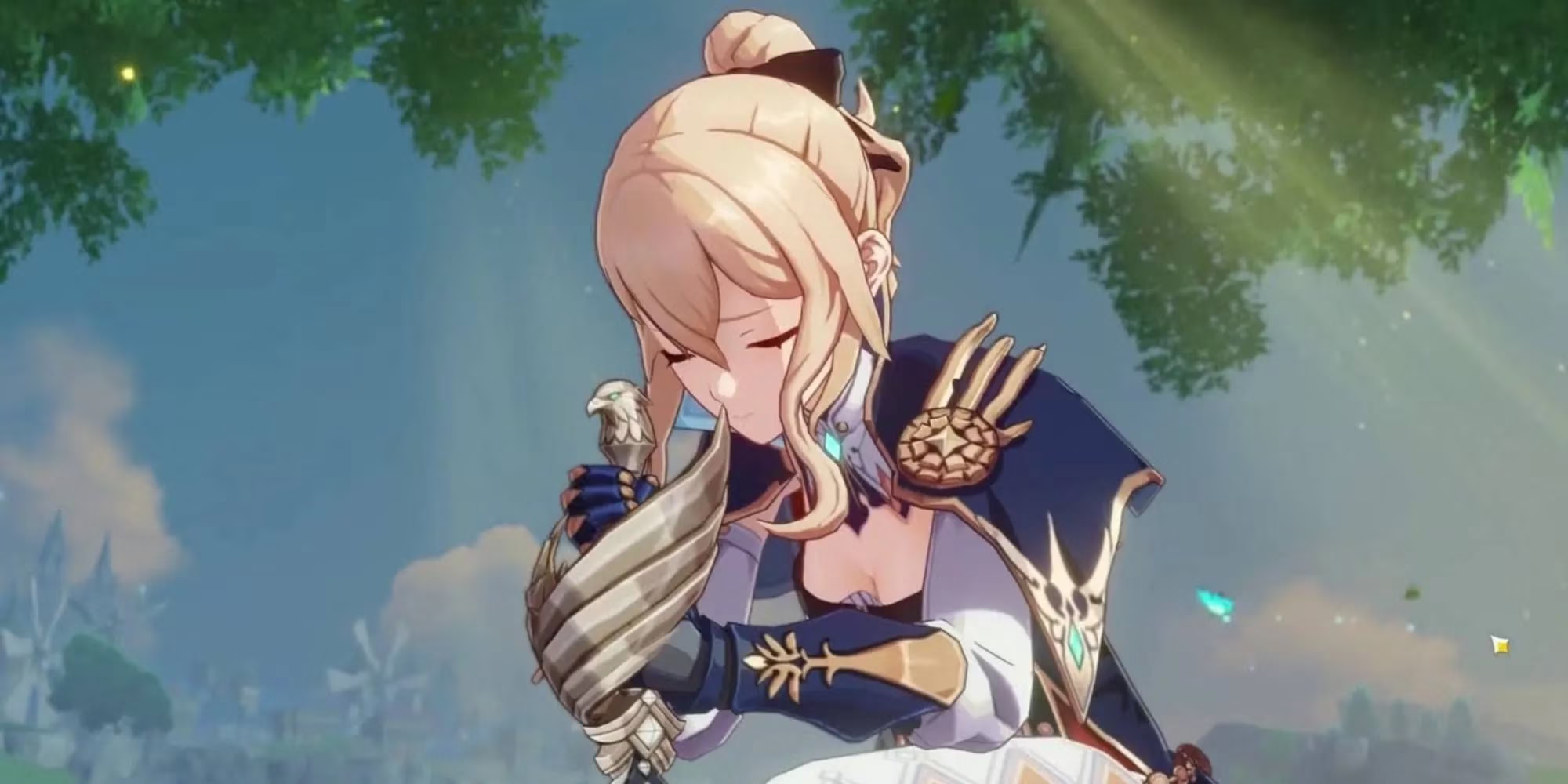
When I first met Jean, I saw someone drowning beneath expectations. The Acting Grand Master of the Knights of Favonius carried Mondstadt on her shoulders like Atlas bearing the heavens, and you could see the cracks forming. Self-doubt whispered in every decision she made, every order she gave.
But here's the thing about Jean—she doesn't break. Through countless quests and quiet moments, I watched her transform that doubt into determination. Her vulnerability became her strength, not despite her fears but because she acknowledged them. She learned that leadership isn't about being invincible; it's about being present, compassionate, and willing to sacrifice for those you protect.
Key Growth Moments:
-
Confronting her perfectionism during the Windblume Festival
-
Learning to delegate and trust her fellow knights
-
Accepting that she doesn't need to carry every burden alone
🔥 Diluc: From Vengeance to Vigilance
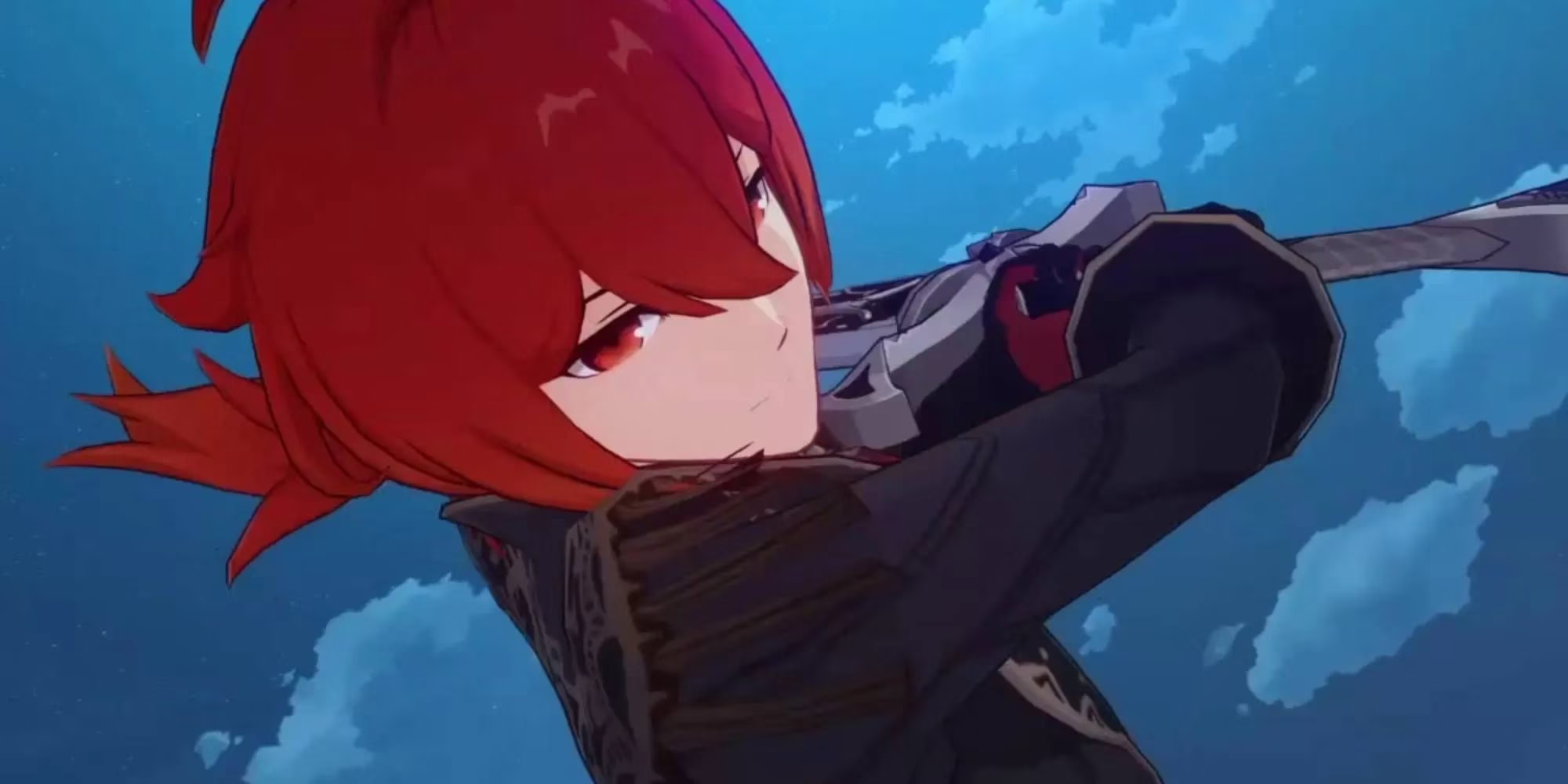
Diluc's story hit different, you know? Here's a man who lost everything—his father, his faith in the Knights, his innocence—and chose to become the darkness that protects the light. The Dawn Winery's owner started as pure vengeance wrapped in a coat, all sharp edges and colder stares.
Watching him soften has been like watching ice melt in spring. Not completely—Diluc will always have that edge—but enough to let warmth through. His journey from isolated avenger to reluctant hero who actually cares about people again? That's the kind of redemption arc that stays with you.
His relationship with Kaeya alone could fill volumes, a complicated dance of brotherhood, betrayal, and the possibility of forgiveness. Diluc taught me that healing doesn't mean forgetting; it means choosing to move forward despite the scars.
💎 Ningguang: The Price of Ambition
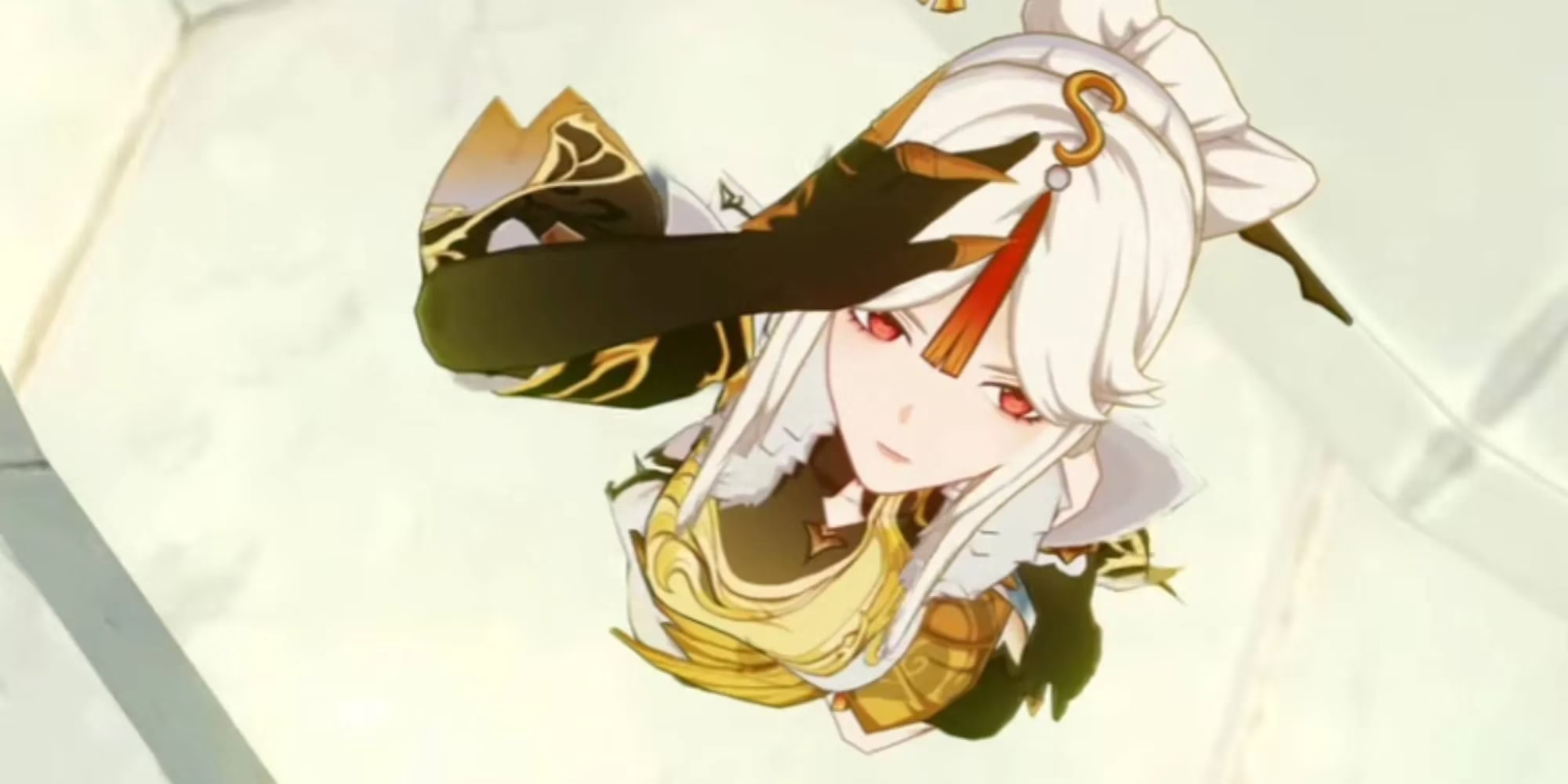
Ningguang's arc is a masterclass in moral complexity. The Tianquan of Liyue didn't climb from poverty to power by being soft—she made calculated decisions, sacrifices that would haunt lesser souls. Yet there's poetry in her pragmatism, a woman who built an empire not for herself alone but to elevate an entire nation.
What captivates me about Ningguang is how the game never judges her ambition. Instead, it asks us to consider: What would you sacrifice for your dreams? When she destroyed the Jade Chamber to save Liyue, I felt the weight of that choice. Everything she'd built, gone in an instant—and she'd do it again.
| Sacrifice | Gain | Lesson |
|---|---|---|
| Personal relationships | Economic prosperity | Leadership requires loneliness |
| The Jade Chamber | Liyue's safety | Some things matter more than power |
| Her past identity | Influence and respect | Transformation demands letting go |
⚔️ Childe: The Warrior's Paradox
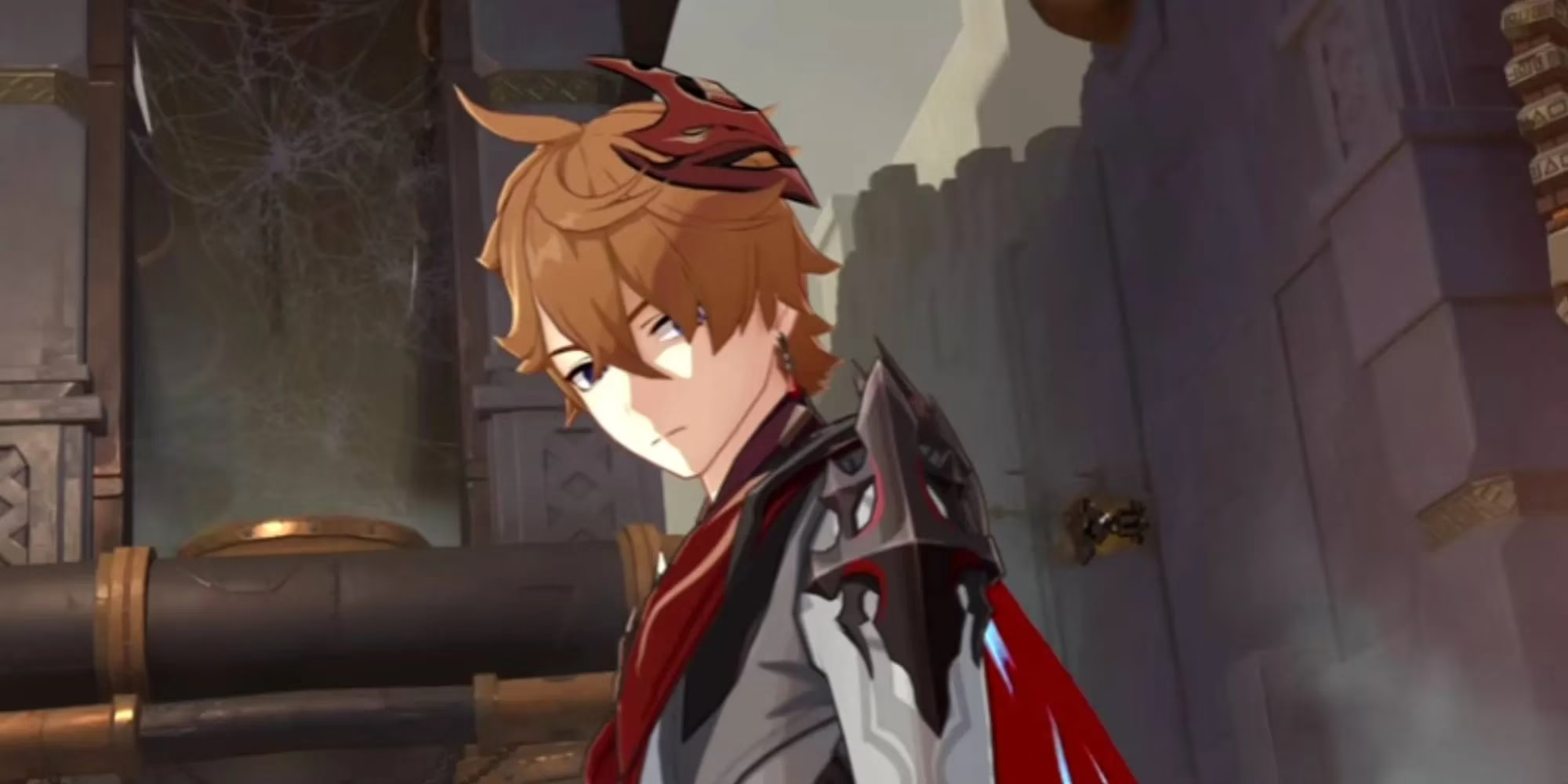
Childe—or Tartaglia, or Ajax, depending on which mask he's wearing—embodies contradiction. He's a Fatui Harbinger who genuinely loves his family. A warrior who craves battle yet cherishes friendship. An antagonist you can't quite hate because his humanity keeps bleeding through the cracks.
His internal conflict between duty to the Tsaritsa and his connections in Liyue creates this beautiful tension. I've watched him struggle with loyalty versus morality, and honestly? There's no clean resolution, which makes it all the more real. Childe's growth isn't about choosing good over evil—it's about learning to live with the gray spaces in between.
The way he interacts with his younger brother Teucer shows a tenderness that contradicts everything we know about Harbingers. That duality makes him unforgettable.
🦌 Ganyu: Finding Home in Two Worlds
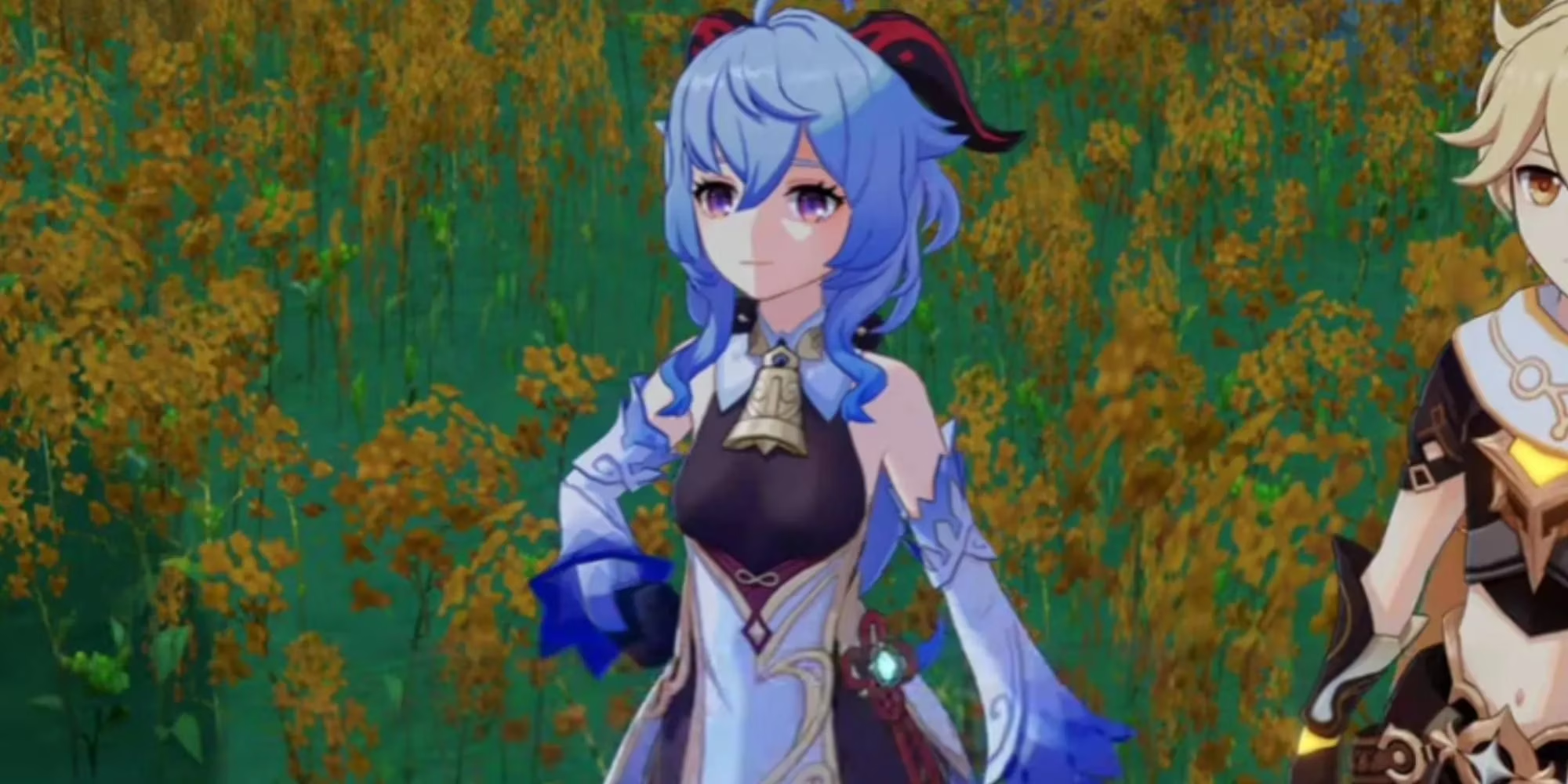
Ganyu's journey speaks to anyone who's ever felt caught between worlds. Half-human, half-Adeptus, fully uncertain of where she belongs—her story is one of the most quietly powerful in Teyvat. For centuries, she worked herself to exhaustion, trying to prove her worth to both sides of her heritage.
Watching her learn to embrace her uniqueness rather than hide it has been transformative. She discovered that her dual nature isn't a weakness or a burden—it's what makes her irreplaceable. Ganyu taught me that belonging isn't about fitting perfectly into one box; it's about creating your own space where all parts of you can exist.
Her quest where she finally takes a vacation? Chef's kiss. 💙
🪨 Zhongli: When Gods Walk Among Mortals
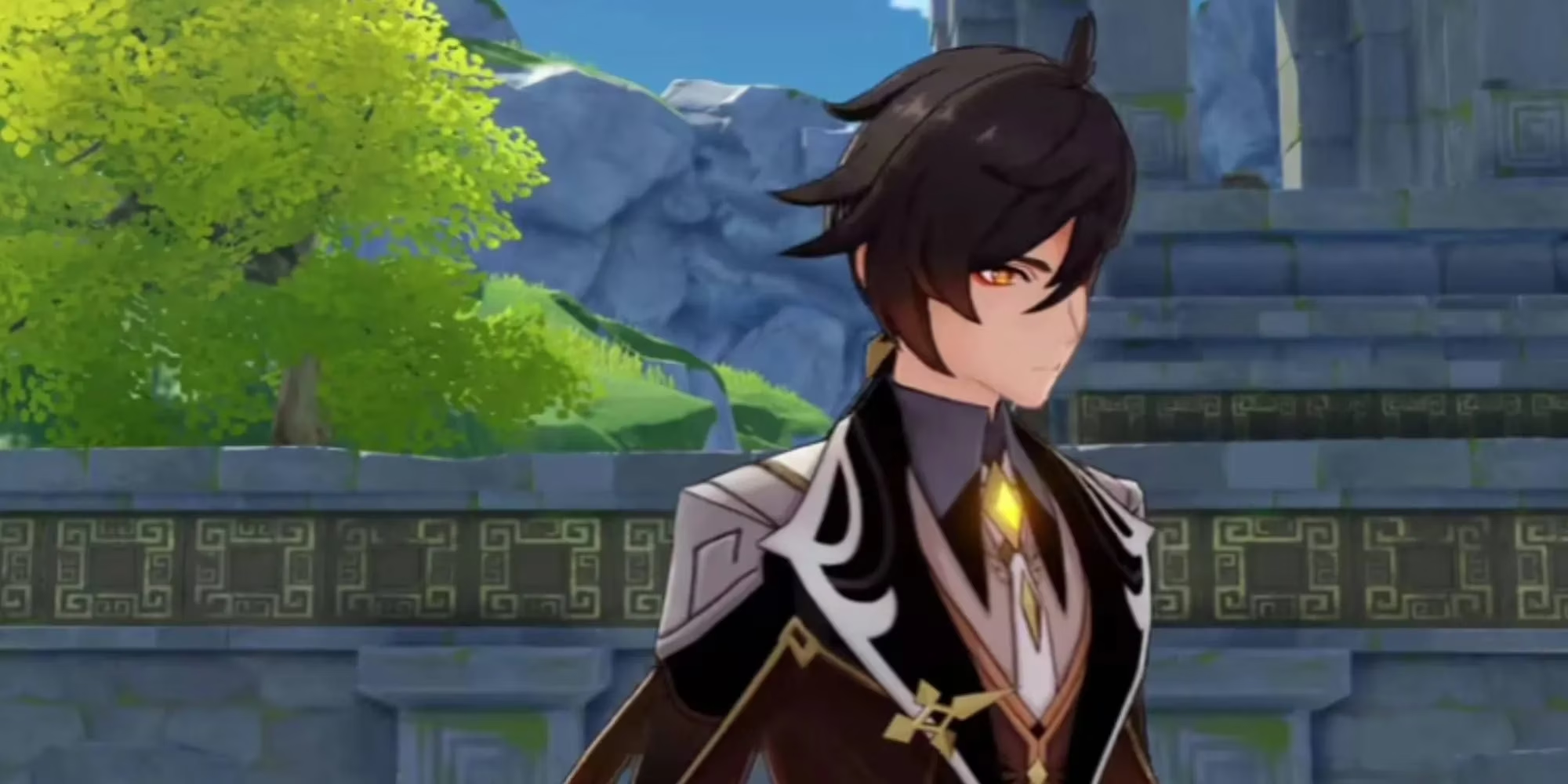
Zhongli's character development is subtle, philosophical, and absolutely brilliant. The former Geo Archon Rex Lapis, now living as a mortal consultant, undergoes a transformation that questions the very nature of divinity and purpose.
He spent millennia as Liyue's protector, making decisions for his people, shaping their destiny. Then he chose to step back, to let humanity chart its own course. That takes a kind of courage we rarely see—the courage to become unnecessary, to trust that what you've built can stand without you.
Through his eyes, I've contemplated:
-
The transient nature of existence
-
Whether immortality is blessing or curse
-
What it means to truly let go
-
The difference between observing life and living it
His friendship with Hu Tao, his contracts and their deeper meanings, his quiet observations about change—Zhongli's arc is a meditation on mortality that only an immortal could provide.
👻 Hu Tao: Dancing with Impermanence
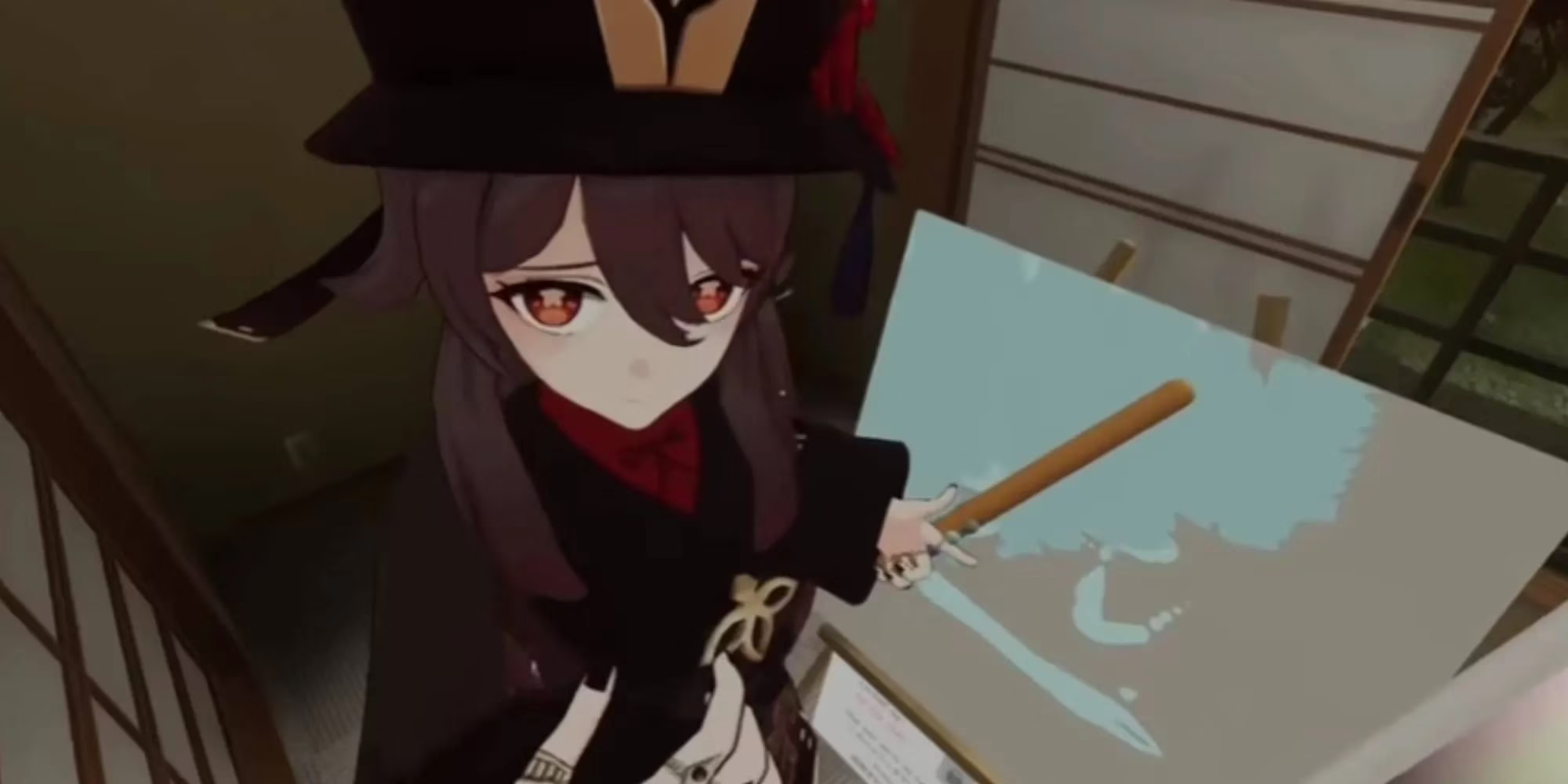
Hu Tao bursts into every scene like a firecracker, all mischief and macabre humor. But beneath that eccentric exterior lies someone who understands life's most fundamental truth: everything ends, and that's what makes it beautiful.
As Director of the Wangsheng Funeral Parlor, she's intimately familiar with death. Yet her character arc isn't about accepting mortality—it's about celebrating life because of mortality. She's learned to find joy in fleeting moments, to cherish relationships knowing they won't last forever, to laugh in the face of inevitability.
Her growth shows us that acknowledging impermanence doesn't lead to despair; it leads to presence. When you know time is limited, every moment becomes precious. Hu Tao lives more fully than most because she never forgets that life is temporary.
😈 Xiao: The Yaksha's Burden
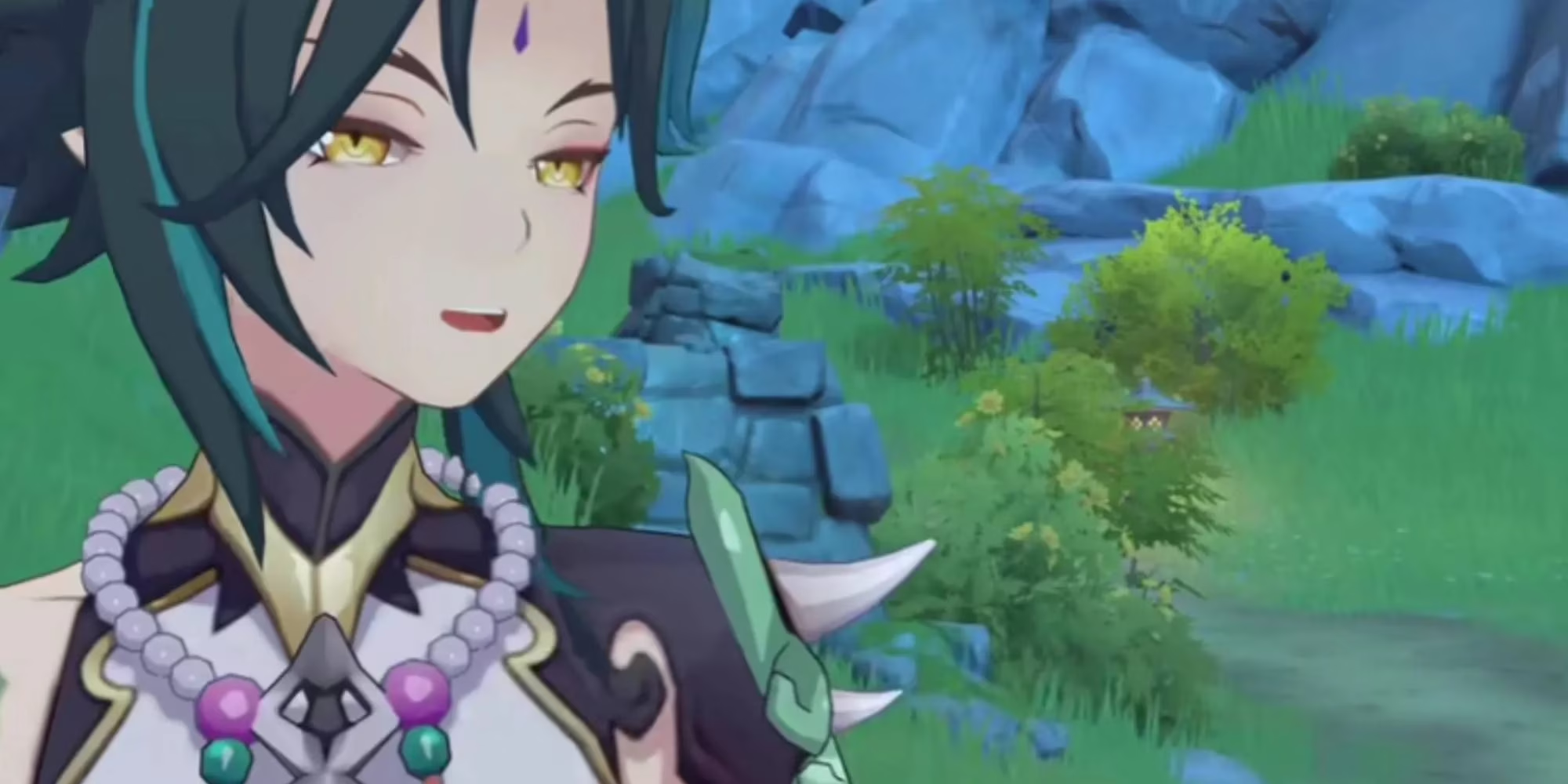
Xiao's story breaks my heart and puts it back together in equal measure. This ancient Yaksha has spent millennia fighting demons—both literal and internal—carrying the weight of fallen comrades and countless battles. His karma debt threatens to consume him, yet he continues protecting Liyue from the shadows.
What makes Xiao's development so powerful is how slowly it unfolds. He doesn't suddenly become cheerful or social. Instead, he learns small lessons: that accepting help isn't weakness, that connection can ease suffering, that he deserves more than endless penance.
Watching him during the Lantern Rite, seeing him almost smile, hearing him call the Traveler by name instead of "mortal"—these tiny victories feel monumental because we know how much they cost him. Xiao's journey reminds us that healing isn't linear, and sometimes survival itself is heroism.
Xiao's Evolution:
-
🚫 Isolation as protection
-
🤝 Reluctant acceptance of companionship
-
💚 Recognition of his own worth
-
🌟 Finding purpose beyond suffering
❄️ Eula: Breaking the Chains of Legacy
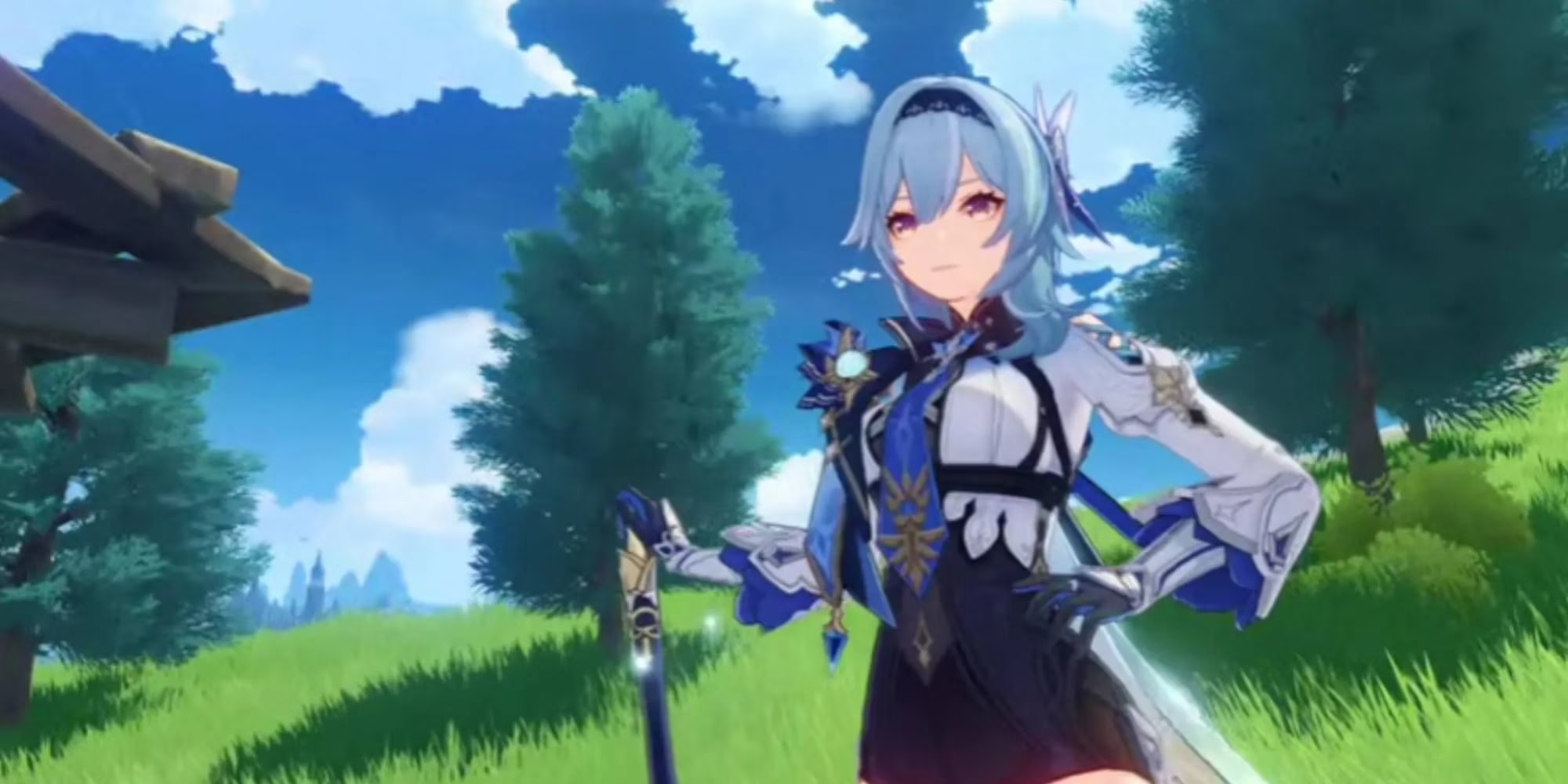
Eula Lawrence carries a name that's both her identity and her prison. Descendant of Mondstadt's former aristocratic oppressors, she faces prejudice for sins she never committed. Her character arc is about forging identity separate from legacy, about proving that we're not defined by our bloodlines.
Her famous "vengeance" catchphrase? It's armor, a way to deflect the hurt of constant rejection. But as her story unfolds, we see the real Eula—someone who desperately wants to protect the city that scorns her, who values honor not because of her heritage but despite it.
She's learning that true nobility comes from actions, not ancestry. That you can acknowledge your family's dark history while refusing to be bound by it. Eula's growth is a rebellion against predetermined destiny, a declaration that we write our own stories.
🗡️ Rosaria: Seeking Absolution in Shadows
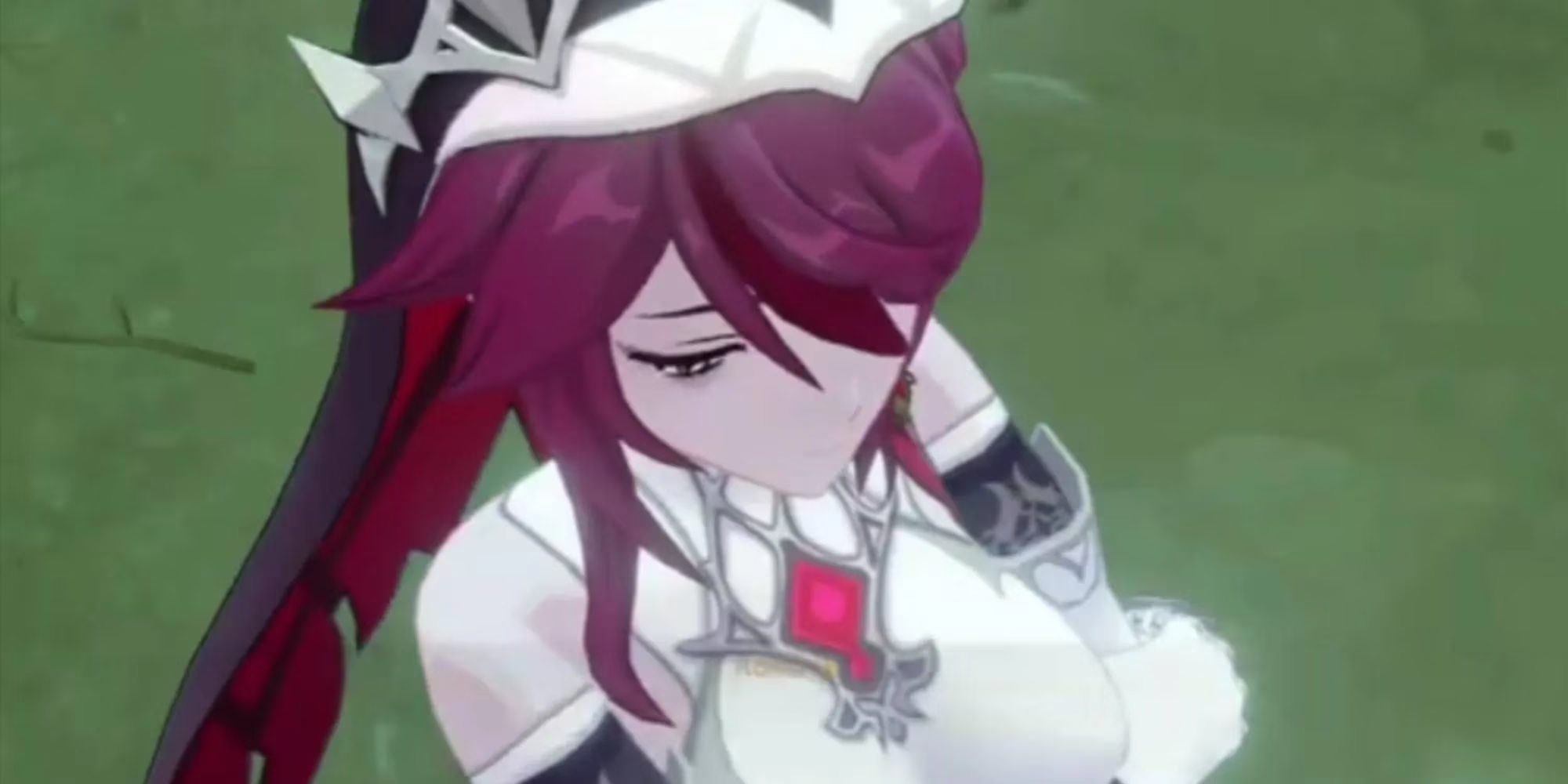
Rosaria stands at the pinnacle of character development in Genshin Impact, and for good reason. This icy sister of the Church of Favonius carries a past so dark it would crush most people. Raised by bandits, forced into violence, shaped by cruelty—she became what her circumstances demanded.
Yet here she is, seeking redemption in her own unconventional way. Rosaria doesn't fit the mold of a typical church sister, and that's precisely the point. Her faith is complicated, her methods questionable, her path to absolution uniquely her own.
What moves me most about Rosaria is her honesty. She doesn't pretend to be pure or holy. She acknowledges her darkness while still reaching for light. Her journey shows that redemption isn't about becoming someone else—it's about accepting who you are while choosing to do better.
Through her interactions with Barbara, her nighttime patrols protecting Mondstadt, her gradual opening up to others, we witness someone learning that forgiveness—especially self-forgiveness—is possible. Rosaria's arc is a testament to the idea that no one is beyond saving, that our past doesn't have to dictate our future.
🌟 Why These Arcs Matter
In 2026, as Genshin Impact continues to expand its universe, these character developments remain the beating heart of the experience. They remind us that growth is messy, non-linear, and deeply personal. Each of these souls has taught me something:
-
Jean showed me that vulnerability and strength coexist
-
Diluc proved that healing is possible after devastating loss
-
Ningguang demonstrated that ambition and sacrifice are inseparable
-
Childe embodied the complexity of human nature
-
Ganyu taught me to embrace all parts of myself
-
Zhongli illustrated the wisdom in letting go
-
Hu Tao celebrated life's impermanence
-
Xiao revealed that connection can ease even ancient pain
-
Eula broke free from the chains of legacy
-
Rosaria found redemption on her own terms
These aren't just pixels and voice lines. They're mirrors reflecting our own struggles, our own growth, our own journeys toward becoming better versions of ourselves. HoYoverse has created something rare in gaming—characters who evolve not just through story beats, but through genuine emotional and philosophical transformation.
As I continue my travels through Teyvat, I carry these lessons with me. Each new character I meet, each story I uncover, adds another layer to this rich tapestry of human experience. And isn't that what the best games do? They don't just entertain us—they change us, one character arc at a time.
What character's journey has resonated most with you? Sometimes I wonder if we choose our favorites, or if they choose us, reflecting back the growth we need most in our own lives. 🌙✨