Genshin Impact's Roblox-Style Mode: A New Era for Anime Gaming
Genshin Impact's Miliastra Wonderland expansion channels Roblox with user-generated content, custom avatars, and social lobbies.
The folks over at MiHoYo have decided to shake things up in a way that's about as subtle as a Hilichurl in a china shop 🎭. Their wildly popular anime action RPG, Genshin Impact, is getting a massive expansion that looks suspiciously familiar to anyone who's ever logged into Roblox. Sure, Genshin Impact boasts impressive numbers, but when you're staring at Roblox's astronomical player counts, even the mighty Traveler might feel a bit inadequate.
Enter Miliastra Wonderland: The Elephant in the Room
They're calling it Miliastra Wonderland, and honestly, watching developers tiptoe around the Roblox comparison during the announcement stream was more entertaining than some actual gameplay. The resemblance isn't just striking—it's practically waving a giant neon sign saying "Hey, remember that other platform?" 😅
Here's where things get interesting: players won't be controlling their carefully curated (read: gacha-rolled) anime waifus and husbandos. Instead, you get to:
-
Customize your own character from scratch
-
Unlock outfits through crafting systems
-
Earn cosmetics via the battle pass
-
Express yourself with emotes in social spaces
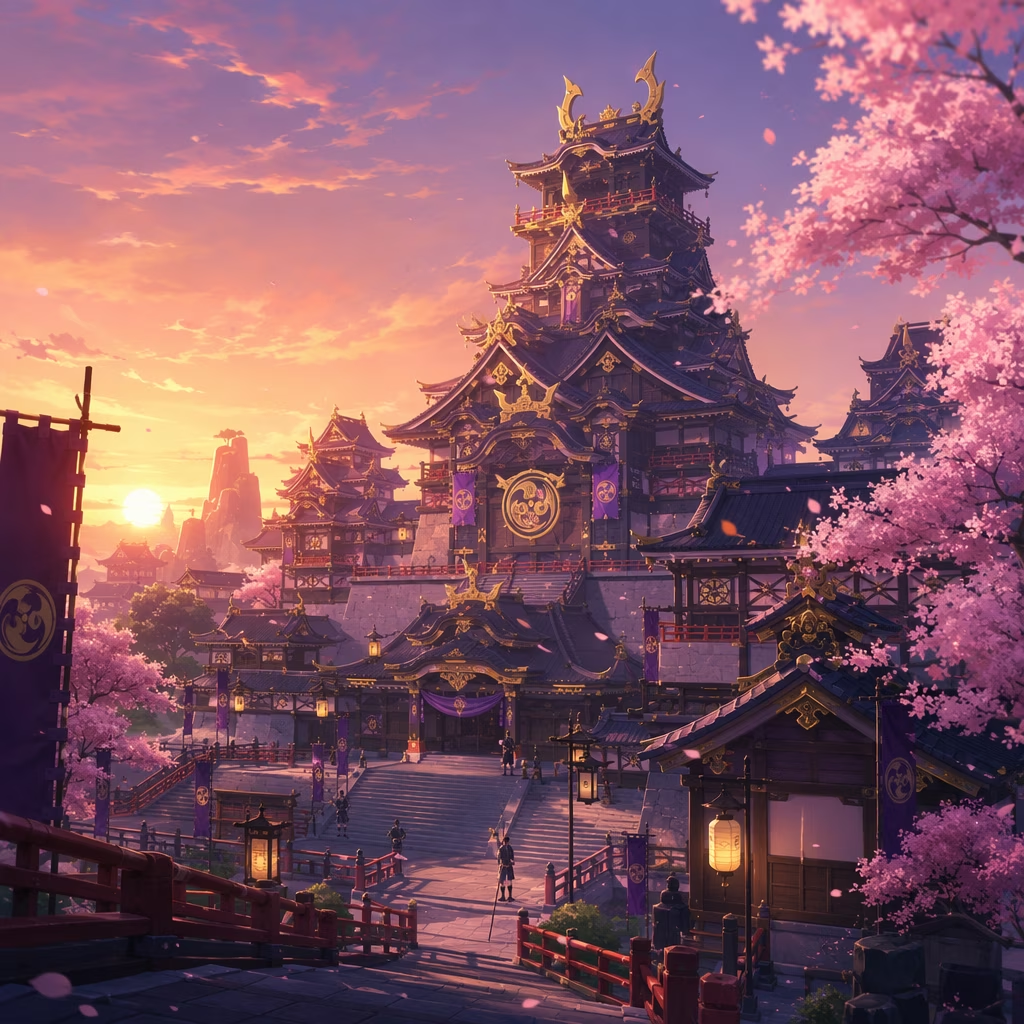
The centerpiece of this new experience is the "Wonderland Lobby"—basically a digital hangout spot where players can socialize and show off their freshly minted avatars. When update 6.1 drops, this lobby will transform into a spooky wonderland complete with jack-o'-lanterns and flickering candles 🎃. One can safely assume the decorations will rotate seasonally, keeping things fresh for returning visitors.
A Catalogue of Chaos: User-Generated Content Takes Center Stage
Now we're getting to the meat and potatoes of Miliastra Wonderland. The mode will feature an extensive catalogue of player-created minigames spanning multiple genres:
| Genre | Description |
|---|---|
| FPS | First-person shooters for competitive players |
| Roguelike | Procedurally generated challenges |
| Management Sim | Build and operate various establishments |
| Survival | Test your endurance against the elements |
Creators wielding this new toolset will have remarkable control over their creations. They can establish custom rules, implement achievement systems, and even set up leaderboards for that extra competitive edge. It's essentially handing the keys to the kingdom to the community and saying, "Go wild, but please don't break anything too important."
The Strategic Play: Fishing in Different Waters
Let's be real for a moment. This move seems specifically designed to lure in players who might not give two Primogems about Genshin Impact's main storyline but would absolutely demolish an afternoon playing quirky user-generated games. The separation from the core Genshin experience is so pronounced that it's difficult not to view this cynically as MiHoYo's attempt to capture the attention of the Roblox generation—kids who've aged out of blocky avatars and crave something with more sophisticated graphics and gameplay mechanics.
Creator Tools: A Developer's Playground
The creation suite appears impressively robust based on preview footage. Designers demonstrated:
-
Placing and resizing familiar Genshin Impact assets
-
Accessing what look like legitimate developer tools
-
Modifying character abilities and appearances
-
Loading preset stages as starting templates
-
Fine-tuning gameplay mechanics with precision
It's like MiHoYo cracked open their development environment and said, "Here you go, have fun!" The level of control seems substantial enough to enable truly creative and diverse experiences.
The Elephant's Smaller Cousin: Unanswered Questions 🤔
Several important questions remain floating in the ether like a Seelie without a home. Will MiHoYo's infamous gacha mechanics infiltrate Miliastra Wonderland? Could this serve as a gateway drug to the broader HoYoVerse for uninitiated players? These mysteries persist.
More concerning is the complete absence of discussion around parental controls and privacy settings during the announcement stream. Considering Roblox currently faces mounting legal pressure over child safety issues, this silence is deafening. One would hope MiHoYo learned from their competitor's struggles rather than repeating the same mistakes.
Development Timeline: Years in the Making
MiHoYo emphasized they've been cooking this mode in their development kitchen for quite some time, and the polish certainly shows in the preview materials. The amount of work required to build such comprehensive creation tools while maintaining Genshin Impact's signature visual style couldn't have been trivial.
Mark your calendars: Miliastra Wonderland launches alongside update 6.1 on October 22, 2026. That's when we'll see whether this ambitious experiment pays off or becomes just another forgotten feature in a live-service game.
The Bigger Picture
Whether you view this as innovation or imitation, Miliastra Wonderland represents MiHoYo's boldest attempt yet to expand beyond their traditional audience. They're not just creating content anymore—they're building a platform for others to create content. It's meta, it's ambitious, and it's definitely going to be interesting to watch unfold.
Time will tell if this Roblox-inspired addition becomes the next big thing in user-generated gaming content or just another case of "we have Roblox at home." Either way, the Genshin Impact community is about to get a whole lot more creative, and that's never a bad thing for players who've been hungry for fresh experiences. 🎮✨
Recent analysis comes from Sensor Tower, and it helps frame why a UGC-heavy mode like Miliastra Wonderland could be strategically attractive: at scale, live-service games increasingly compete on retention loops, social features, and monetizable cosmetics rather than only story updates. If MiHoYo can turn the “Wonderland Lobby” into a repeat-visit social hub—then feed it with a steady stream of community-built minigames, seasonal events, and battle-pass-driven avatar customization—it mirrors broader mobile-market trends where engagement and spend follow platforms that keep players creating, sharing, and returning daily.